Call: (212) 877-7929
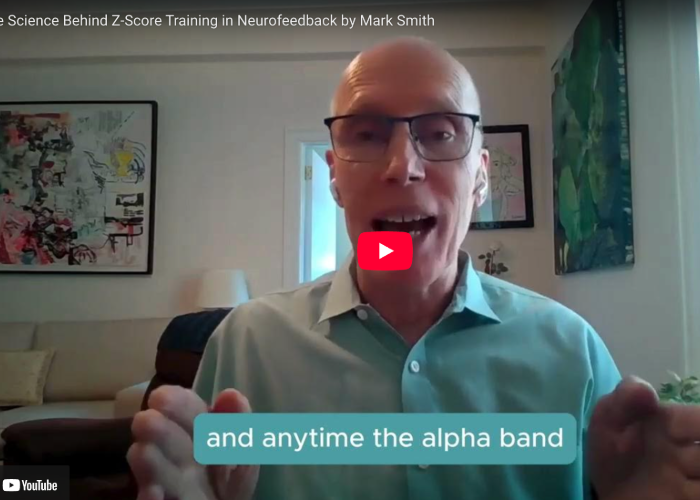
At its core, Z-Score training uses real-time brainwave data to guide the brain toward healthier, more regulated activity. By comparing a client’s brainwave activity to a normative database, the system identifies how far certain frequencies deviate from what's considered "normal"—this deviation is referred to as a z-score.
Much like how averages and standard deviations are used to understand height or weight in a population, z-scores in neurofeedback allow clinicians to track how a person’s brain activity compares to a well-researched standard. This statistical feedback becomes the foundation for highly individualized training protocols.
To put it simply: if the average male height in a population is six feet, a person who is 6'6" would be two standard deviations above the mean, while someone who is 5'3" would be three standard deviations below. That difference is known as a z-score.
When applied to brainwave activity—like the alpha band (typically 8–12 Hz)—a z-score indicates how far an individual’s brain function is from the healthy average. If alpha activity is significantly higher or lower than the norm, it may correlate with challenges such as poor focus, anxiety, or disrupted sleep.
Z-Score Neurofeedback leverages this data to help the brain self-correct. Using a real-time EEG system and a normative database, the system delivers feedback (usually auditory or visual rewards) when the brain produces activity within the target range. For instance, a reward range might be set between a z-score of -1 and +1 for alpha frequency. When the brain operates within that zone, the client receives positive feedback. When it falls outside, the feedback stops.
This process encourages the brain to "learn" how to stay within optimal ranges, similar to how a thermostat regulates room temperature.
Unlike traditional neurofeedback protocols that train specific frequencies in isolation, Z-Score Neurofeedback provides a dynamic, whole-brain approach. It allows for:
This method is frequently used to support individuals experiencing attention deficits, mood disorders, sleep disturbances, trauma, and cognitive decline.
Mark Smith was among the earliest clinicians in the country to implement Z-Score training, working alongside the theoretical pioneers Dr. Robert Fascher and Dr. Tom Collura. While they developed the foundational framework, Mark Smith helped bring it to life through real-world clinical application.
Today, Z-Score Neurofeedback is a widely accepted and growing method used by neurofeedback professionals across the globe to promote lasting, measurable brain optimization.
For practitioners seeking to incorporate Z-Score training into their neurofeedback practice—ISF Associates offers expert guidance and personalized training programs for clinicians.
Contact ISF Associates to schedule a discovery call or learn more.
Visit our service pages for information on neurofeedback tools, mentorship, and support.
